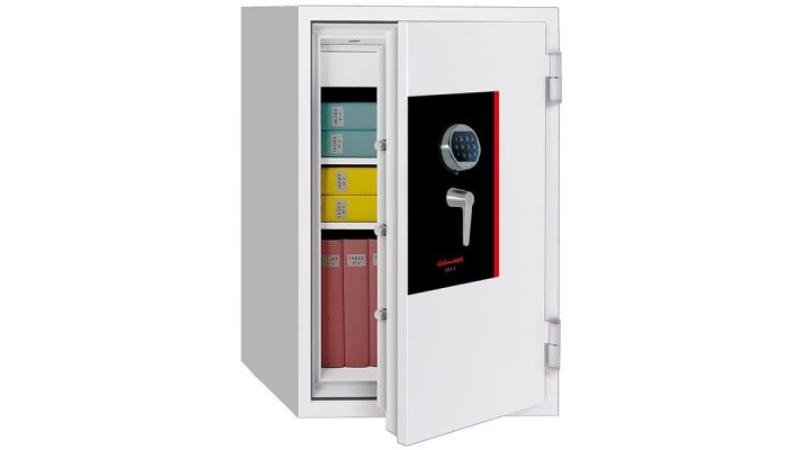
Fire doesn’t knock before it enters. It doesn’t give you time to gather your documents, grab your hard drive, or rescue the jewellery your grandmother left behind. In a matter of minutes, decades of accumulated paperwork, irreplaceable keepsakes, and critical financial records can be reduced to ash. For Australian homeowners, the question is no longer whether a home safe is worth having — it’s whether the one you choose is actually rated to do the job when everything is on the line.
Smoke Alarms Warn You. A Rated Safe Protects What You Leave Behind.
Most Australians invest in smoke alarms, deadbolts, and security cameras without giving a second thought to what happens to their most important belongings during a fire. The assumption is that if you get out safely, you can sort the rest out later. But “sorting it out later” after a house fire means applying for replacement documents that can take months, reconstructing financial records from scratch, and accepting that some things — original photographs, handwritten letters, family heirlooms — simply cannot be reissued or recovered.
A rated home safe addresses exactly this gap. It is not a replacement for a fire escape plan or a working alarm system. It is the last line of protection for the things that matter most once everything else has failed.
Heat Builds Long Before Flames Arrive
One of the most misunderstood aspects of fire damage is how early the destruction begins. You don’t need open flames to lose critical documents or destroy electronic media. In a typical house fire, room temperatures can climb to 200°C or higher well before fire physically enters the space. Paper begins to char and eventually ignite at around 233°C. More critically, hard drives, USB sticks, and SD cards begin to degrade at just 52°C — a temperature easily reached in an adjacent room during a moderate fire.
This is precisely why the rating on a safe matters so much. A standard fire-rated safe — certified to keep internal temperatures below 177°C — will protect paper documents effectively. But if you’re storing digital media of any kind, you need a safe with an independently verified data or media rating, which keeps the interior below 52°C throughout the test period. The difference between these two certifications is not a technicality. For anyone storing external drives, backup discs, or USB keys, it is the difference between recovery and total loss.
Understanding Fire Ratings Without the Jargon
Fire ratings on safes come from independent testing organisations, with UL (Underwriters Laboratories) and EN (European Norm) being the two most widely recognised standards in the Australian market. These tests expose safes to standardised fire conditions and measure whether the interior remains within the defined temperature threshold for the rated duration — typically 30 minutes, 60 minutes, or 120 minutes.
What this means in practice: a UL 72 Class 350 rating guarantees that internal temperatures will not exceed 177°C for the stated duration. A Class 125 rating — the data and media standard — holds the interior below 125°C. A Class 72 rating keeps it under 52°C, offering the highest level of protection for electronic media. Always verify that the rating on any safe you consider comes from independent laboratory testing, not a manufacturer’s own claim. Self-certified fire resistance figures are common in cheaper products and carry no meaningful guarantee.
Why Water Resistance Deserves Equal Attention
Fire damage and water damage are inseparable during a house fire. The hoses used by fire services discharge water at high pressure and volume, and prolonged flooding of a burned-out space is common during and after firefighting operations. A safe that protects its contents from heat but allows water ingress can still result in the destruction of documents through saturation and mould. This is especially relevant for homeowners in flood-prone areas of regional Australia, where water damage can occur independently of fire risk.
The Supplier Behind the Safe Matters Too
Choosing a specialist supplier with genuine product knowledge and local support makes a real difference — not just at the point of purchase, but years later when battery replacements, lockout assistance, or warranty claims become relevant. Safes Australia is one such specialist, offering verified fire-rated models with transparent certification and the kind of after-sales support that gives homeowners genuine confidence in what they’ve bought.
One Decision That Protects Everything Else
A rated home safe won’t prevent a fire. It won’t reduce your insurance premium or make the experience of a house fire any less devastating. What it will do is ensure that when you walk back into what remains of your home, the documents that identify you, the media that stores your memories, and the valuables that carry personal meaning are still there — intact, retrievable, and protected. That outcome is worth every dollar of the investment.