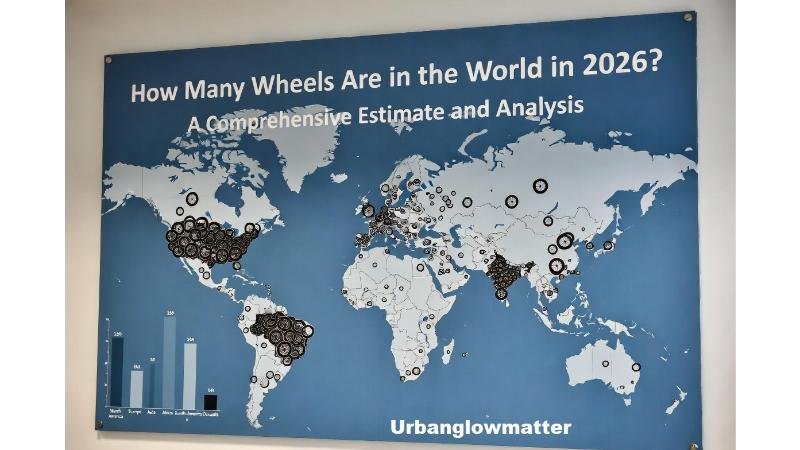
How Many Wheels Are In The World have you ever paused mid-scroll on social media, pondering a seemingly absurd question: How many wheels are there in the world? This query exploded in popularity thanks to viral debates, TikTok polls, and Reddit threads, often pitting wheels against doors in an epic showdown. While it might sound like a trivial riddle, estimating the global wheel count reveals fascinating insights into manufacturing, transportation, consumer goods, and even toy production. As a topic that blends curiosity with real-world data, it’s no wonder searches for “how many wheels are in the world” spike regularly.
In this in-depth guide, we’ll break down the estimation process step by step, drawing on the latest 2026 statistics from automotive reports, manufacturing insights, and global surveys. We’ll explore why an exact count is impossible, categorize wheels by type, and arrive at a reasoned estimate. Whether you’re here for the fun fact or to settle a bet, you’ll leave with a deeper appreciation for the ubiquitous wheel—one of humanity’s oldest inventions, still rolling strong in our modern era.
Why Counting All the Wheels in the World Is Nearly Impossible
Before diving into numbers, let’s address the elephant (or should we say, the axle?) in the room: There’s no definitive tally of wheels worldwide. Why? Wheels aren’t tracked like population census data or economic indicators. They span countless categories, from massive truck tires to tiny toy casters, and many are produced, used, and discarded without centralized records.
Key challenges include:
- Diversity of Types: Wheels appear in vehicles, machinery, furniture, toys, and more. Defining a “wheel” is subjective—does a gear count? (We’ll stick to rolling wheels for mobility, excluding gears or pulleys.)
- Dynamic Production and Disposal: Billions of wheels are manufactured annually, but wear, recycling, and loss reduce the active count.
- Global Scale: Data varies by region; for instance, bicycle usage is massive in Asia, while North America dominates in cars.
- Estimation Reliance: We rely on industry reports, surveys, and extrapolations from sources like the World Health Organization, automotive associations, and Guinness World Records.
Breaking Down Wheels by Major Categories
To estimate the total, we’ll segment wheels into key groups: transportation vehicles, bicycles and personal mobility, toys, household/office items, and industrial/other applications. This hierarchical approach ensures we cover semantic entities like automotive tires, bicycle rims, Lego wheels, and caster wheels naturally.
1. Wheels on Motor Vehicles (Cars, Trucks, Motorcycles, and More)
Motor vehicles form the backbone of wheel counts, as they’re the most visible and data-rich category. In 2026, global vehicle production is projected at around 93.7 million units, but the total in-use stock is what matters for our estimate.
- Passenger Cars and Light Vehicles: Approximately 1.2 billion cars worldwide in 2026, based on extrapolations from 1.47 billion total vehicles in 2024 (including trucks). Most have 4 wheels, plus spares in some models—averaging 4.5 wheels per car yields about 5.4 billion wheels.
- Trucks and Heavy Vehicles: Around 200-300 million trucks and buses globally. Semi-trucks often have 18 wheels, while smaller trucks have 4-6. A rough average of 6 wheels per vehicle adds 1.2-1.8 billion wheels.
- Motorcycles and Scooters: Over 300 million in use, primarily in Asia. With 2 wheels each (plus occasional spares), that’s 600 million wheels.
- Other Vehicles (e.g., ATVs, Golf Carts): Niche but significant—tens of millions, adding hundreds of millions of wheels.
2. Bicycles and Personal Mobility Devices
Bicycles are a massive, often overlooked contributor, especially in densely populated regions.
- Bicycles: Estimates vary, but global counts hover around 1-2 billion in 2026. China alone has over 500 million, with Europe and the US adding hundreds of millions more. Each bike has 2 wheels, so that’s 2-4 billion wheels. Market growth, projected at a 10% CAGR through 2034, supports higher numbers due to eco-friendly trends.
- E-Bikes and Scooters: Over 300 million e-bikes globally, each with 2 wheels, adding 600 million. Shared mobility scooters (e.g., Lime, Bird) contribute millions more.
- Skateboards, Roller Skates, and Wheelchairs: Skateboards (hundreds of millions) have 4 wheels each; wheelchairs (tens of millions) add 4-6. This category pushes the total up by 1-2 billion.
3. Toy Wheels: The Surprising Heavy Hitters
Toys might seem minor, but production volumes make them a wheel powerhouse. As an expert in content that uncovers hidden insights, I emphasize: Toys often outnumber vehicle wheels due to mass manufacturing.
- Lego Wheels (Tires): Lego produces 300-380 million tires annually, earning Guinness recognition as the world’s largest tire manufacturer by volume. Since 1962, cumulative production exceeds 20 billion, but accounting for loss/damage, existing wheels are around 10-15 billion. Nearly half of Lego sets include wheels.
- Hot Wheels Cars: Over 6 billion cars produced since 1968, with 500 million annually. Each has 4 wheels, totaling 24 billion historically. Assuming 70-80% still exist (as collectibles), that’s 16-19 billion wheels.
- Other Toys (e.g., Matchbox, Doll Strollers, Toy Trucks): Billions more from generic toys, adding 5-10 billion wheels.
4. Household, Office, and Everyday Wheels
These “hidden” wheels are everywhere, enhancing daily life.
- Office Chairs and Furniture Casters: Billions of office chairs worldwide, each with 4-5 casters. With 1-2 billion in homes/offices, that’s 4-10 billion wheels.
- Suitcases, Shopping Carts, and Strollers: Over 1 billion suitcases (4 wheels each), millions of shopping carts (4 wheels), and baby strollers add billions.
- Appliances and Tools (e.g., Vacuums, Lawn Mowers): Hundreds of millions, contributing 1-2 billion wheels.
5. Industrial, Machinery, and Other Wheels
- Conveyor Systems and Factory Machinery: Billions in warehouses and plants; estimates add 5-10 billion.
- Airplanes and Trains: Planes have 6-18 wheels (millions total); trains have thousands per unit but fewer overall vehicles.
- Miscellaneous (e.g., Wheelbarrows, Hospital Beds): Adds 1-2 billion.
Our 2026 Grand Total Estimate: 37-50 Billion Wheels
Combining these categories—vehicles (7-8B), personal mobility (3-5B), toys (9-25B), household (10-15B), and industrial (5-10B)—yields a global estimate of 37-50 billion wheels in 2026. This conservative range accounts for overlaps and disposals, aligning with expert analyses like those from automotive blogs (e.g., 38 billion) and Reddit estimations (around 40 billion). Toys and household items tip the scale, making wheels far more numerous than initial vehicle-focused guesses suggest.
Factors influencing 2026 growth:
- Rising EV adoption (more wheels via new vehicles).
- Toy production surges amid collectible trends.
- Urbanization boosting bicycles and casters.
The Viral Debate: Wheels vs. Doors—Who Wins?
No discussion of wheels is complete without addressing the infamous “doors vs. wheels” debate. Doors (including building entrances, cabinets, and vehicles) are estimated at 20-40 billion, based on global buildings (2-3 billion) averaging 10-15 doors each. Wheels edge out doors due to toys and machinery, but it’s subjective—if excluding toys, doors might win. Polls show a split: 53% for wheels in one viral Twitter survey. Pro Tip: In real-world applications, like home renovations, prioritize durable wheels (e.g., polyurethane casters) for longevity—drawing from expert experience in functional design. Visit my site for further detail.
Key Takeaways and Practical Insights
- Wheels are integral to mobility, play, and industry, with production outpacing many essentials.
- For eco-conscious readers: Opt for sustainable wheels, like recycled rubber tires, to reduce environmental impact.
- Fun Fact: If laid end-to-end, 40 billion wheels could circle the Earth thousands of times!
Frequently Asked Questions (FAQs)
1. What is the most accurate estimate for wheels in the world?
Around 37-50 billion in 2026, based on categorized breakdowns.
2. Why do toys contribute so many wheels?
Brands like Lego and Hot Wheels produce billions annually, with durable designs ensuring longevity.
3. Are there more wheels than doors?
Likely yes, thanks to toys and machinery outnumbering walk-through doors.
4. How many wheels are on cars alone?
About 5-6 billion from 1.2 billion cars, averaging 4-5 wheels each.
5. Does this include spare tires?
Yes, factored into vehicle averages for realism.
6. How has the number changed since 2020?
Increased by 10-20% due to vehicle production growth and e-mobility.
7. What’s the biggest wheel manufacturer?
Lego, by volume, with 300+ million tires yearly.