Key Takeaways
- SD-WAN enhances network performance and reliability for businesses.
- It offers cost-effective solutions compared to traditional WAN architectures.
- SD-WAN simplifies network management and improves security.
- Businesses across various industries are adopting SD-WAN to support digital transformation.
Introduction to SD-WAN
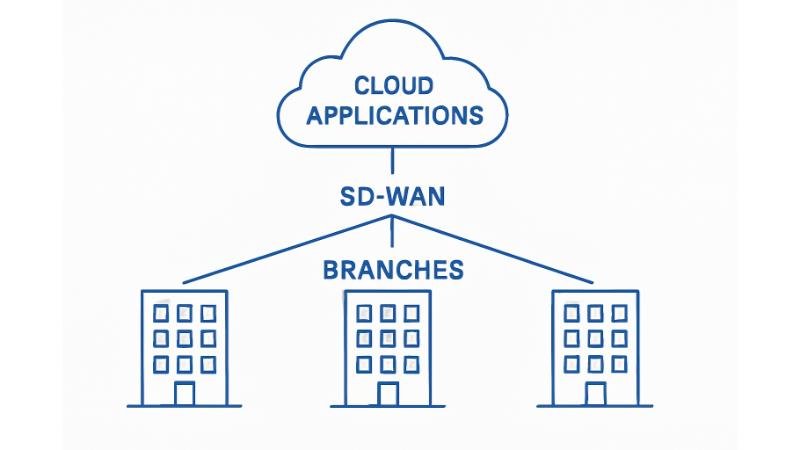
As digital transformation accelerates, companies face an urgent need to support dynamic work environments across locations while maintaining excellent connectivity. SD-WAN (Software-Defined Wide Area Network) is emerging as the backbone of modern business networking, enabling organizations to combine agility, performance, and security as they grow. Compared to traditional WAN solutions, SD-WAN transforms how enterprises connect remote sites, branch offices, and cloud applications, making it a central pillar of the shift towards more resilient, scalable infrastructure.
The technology leverages intelligent routing and centralized management to handle rising traffic, diverse applications, and geographically dispersed teams. By shifting the focus from hardware-centric connectivity to software-driven control, SD-WAN solutions are rapidly becoming the preferred choice for organizations looking to future-proof their networks against new digital demands. Enterprises utilizing SD-WAN benefit from seamless adaptation to network changes, real-time responses to performance fluctuations, and optimized use of available bandwidth. These advancements enable companies to provide superior user experiences for both customers and employees, supporting everything from remote work to cloud application deployment. Across all sectors, SD-WAN is driving cost efficiencies and powering innovation in how businesses communicate internally and with customers. Adoption continues to climb as even highly regulated industries realize the value of secure, scalable, and simplified connectivity.
Benefits of SD-WAN
SD-WAN’s advantages go well beyond the capabilities of legacy WAN architectures. Dynamic traffic routing ensures that mission-critical applications receive priority, automatically steering around congestion and outages. This improvement eliminates bottlenecks and delivers consistent performance, regardless of user location.
- Improved Performance:Automated path selection intelligently routes data along the fastest and most reliable connections, directly boosting application responsiveness and uptime.
- Cost Efficiency:Organizations can significantly reduce operational overhead by tapping into low-cost broadband and eliminating dependence on expensive private circuits like MPLS, leading to measurable cost savings.
- Simplified Management:Centralized orchestration helps IT teams deploy, monitor, and update policies across dispersed sites from a single dashboard, reducing human error and improving agility.
- Enhanced Security:Built-in encryption, segmentation, and next-generation firewall capabilities ensure that data remains protected, even over public networks. This is a key differentiator in an era of growing cyber threats.
Industry Adoption of SD-WAN
Companies from retail and healthcare to manufacturing and finance are embracing SD-WAN to streamline network integration following mergers, improve compliance, and speed up access to cloud services. For example, a global sporting goods manufacturer recently leveraged SD-WAN to integrate branch offices acquired from a merger. This streamlined process ensured secure, unified access to cloud-hosted applications and enabled flexible, low-latency connections that traditional WANs could not match. Educational institutions are also shifting to SD-WAN to support remote learning and collaborate across campuses. The ability to scale bandwidth on demand and secure sensitive information has dramatically improved performance and reduced support tickets across education systems globally.
SD-WAN Market Growth
Market analysts project a booming future for SD-WAN. According to Technavio, the global SD-WAN market is expected to grow by USD 13.66 billion between 2024 and 2028, driven by demand for cloud solutions and the integration of artificial intelligence. This growth reflects a broader shift as enterprises continue prioritizing reliable network infrastructures that adapt to rapid technological evolution. As more businesses transition to cloud-first models, SD-WAN will play a pivotal role in enabling secure, scalable, and efficient connectivity.
SD-WAN and Digital Transformation
The ability to adapt rapidly to new digital demands underpins successful digital transformation. SD-WAN empowers organizations to move applications across private and public clouds, smoothly support hybrid workforces, and scale bandwidth as data traffic surges. Those deploying SD-WAN are far better equipped to implement security updates, launch new services, and deliver seamless experiences to users in any location. As digital transformation becomes a strategic imperative, SD-WAN’s programmability and automation offer IT leaders greater control over their networks, accelerating innovation and responding to market changes more efficiently.
Challenges in SD-WAN Implementation
Despite the clear benefits, organizations can encounter obstacles during SD-WAN rollout. Interoperability with legacy equipment and complex integration with existing security protocols are common concerns. Choosing the right mix of vendors, aligning solutions with compliance needs, and developing new internal skills also represent significant challenges.
- Ensuring compatibility with legacy network infrastructure and prioritizing mission-critical traffic can require significant planning and testing.
- Organizations may face logistical hurdles aligning multiple vendor solutions and ensuring interoperability across platforms.
- Security remains top of mind, as reliance on internet-based connections demands rigorous policy management and continuous monitoring.
Future of SD-WAN
The future for SD-WAN is promising. Continued investment in artificial intelligence, machine learning, and automation will expand SD-WAN’s capabilities, making networks smarter and even more resilient. As edge computing, Internet of Things (IoT) devices, and 5G connectivity proliferate, SD-WAN will remain a vital technology for managing distributed environments at scale. Businesses that invest in SD-WAN today position themselves to benefit from more agile, secure, and adaptive networks, better equipped to respond to tomorrow’s digital challenges.
Conclusion
SD-WAN is revolutionizing how businesses approach network connectivity. As adoption increases and technology continues to develop, SD-WAN will solidify its place as the foundation for next-generation business connectivity.