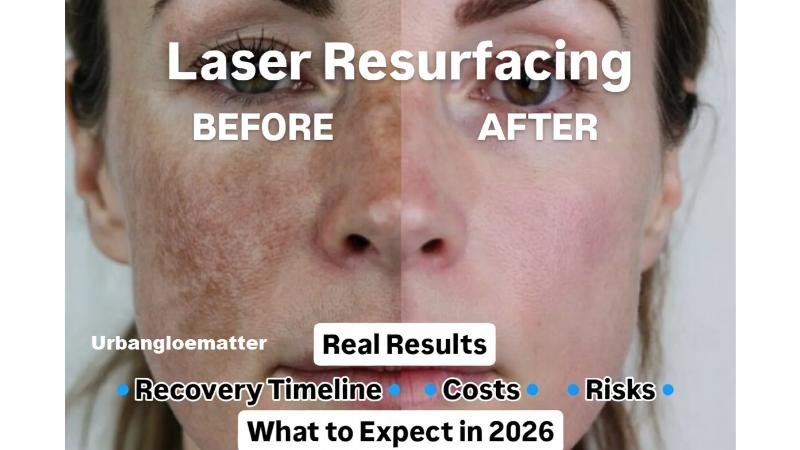
Laser skin resurfacing delivers some of the most dramatic, visible transformations in non-surgical facial rejuvenation. Patients routinely see smoother texture, faded scars, diminished wrinkles, and more even tone—often in a single session for ablative treatments. If you’re searching “laser resurfacing before and after,” you want honest visuals, realistic expectations, and expert guidance on whether this treatment fits your skin goals, skin type, budget, and lifestyle. This comprehensive guide draws from authoritative sources including Mayo Clinic, Cleveland Clinic, and American Society of Plastic Surgeons (ASPS) data, plus real clinical outcomes. It covers every aspect: types of lasers, who benefits most, detailed day-by-day recovery, typical before-and-after changes, costs in 2026, preparation, aftercare, longevity, and alternatives. By the end, you’ll have the knowledge to make a confident, informed decision.
What Is Laser Skin Resurfacing?
Laser resurfacing uses concentrated beams of light to precisely remove or remodel damaged skin layers while stimulating deep collagen production. The result: new, healthier skin emerges with improved firmness, texture, and color. It treats photoaging (sun damage), fine lines, deep wrinkles, acne scars, uneven pigmentation, and certain benign lesions. Unlike creams or superficial peels, lasers reach the dermis to trigger long-term remodeling.
Key mechanism: Ablative lasers vaporize outer layers; all types heat the dermis to boost collagen and elastin. Fractional delivery (treating microscopic columns while sparing surrounding tissue) has become the standard because it slashes downtime while maintaining impressive results.
Types of Laser Resurfacing: Ablative vs. Non-Ablative vs. Fractional
Choosing the right laser depends on your concerns, downtime tolerance, and skin type (Fitzpatrick scale). Here’s a clear comparison:
| Type | Depth & Action | Best For | Downtime | Sessions Needed | Ideal Skin Types |
|---|---|---|---|---|---|
| Ablative CO2 | Removes epidermis + heats dermis | Deep wrinkles, severe sun damage, acne scars | 7–14+ days | Usually 1 | Fair to light (I–III) |
| Ablative Erbium (Er:YAG) | Precise ablation, less heat | Fine lines, moderate scars, pigmentation | 5–10 days | 1–2 | Fair to medium (I–IV) |
| Fractional CO2 / Hybrid | Micro-columns of ablation | Balanced rejuvenation, scars, texture | 3–7 days | 1–3 | I–IV (with caution) |
| Non-Ablative (e.g., fractional non-ablative, IPL) | Heats dermis without removing layers | Mild wrinkles, redness, tone | 0–2 days | 3–6 | All types, including V–VI |
CO2 Laser Resurfacing remains the gold standard for dramatic results. Newer fractional and hybrid systems (e.g., combining CO2 with 1570 nm) offer customizable depth with faster healing.
Erbium excels for precision around eyes and mouth with less redness.
Non-ablative options suit busy patients or darker skin tones where pigmentation risk is higher.
Who Is a Good Candidate for Laser Resurfacing?
Ideal candidates:
- Ages 35–65 with mild-to-severe photoaging, static wrinkles, acne scars, or uneven tone.
- Realistic expectations and commitment to sun protection.
- Non-smokers or willing to quit 2–4 weeks before/after.
- Fitzpatrick I–IV (fair to olive); selected fractional options work for V with experienced providers.
Not ideal if:
- Active acne, isotretinoin use in past 12 months, keloid history, autoimmune disease affecting healing, pregnancy, or very dark skin (VI) without specialized non-ablative protocols.
- Deep sagging (better addressed by facelift or energy devices like Ultherapy).
Conditions Treated: Real Laser Resurfacing Before and After Results
1. Fine Lines & Deep Wrinkles Perioral (smoker’s lines), crow’s feet, and forehead creases respond exceptionally well to ablative CO2 or Erbium. Expect 50–80% improvement in depth and skin tightness after one session. Collagen continues building for 3–6 months.
2. Acne Scars (Atrophic & Boxcar) Fractional CO2 or Erbium dramatically smooths ice-pick and rolling scars by 40–70% in most patients after 1–3 sessions. Texture improves more than color initially.
3. Sun Damage, Age Spots & Hyperpigmentation Lasers vaporize pigmented cells and even tone. Dramatic clearance of lentigines and melasma-prone areas (with proper aftercare).
The Laser Resurfacing Procedure: What Happens Step-by-Step
- Consultation & Prep — Skin analysis, photos, antiviral prescription if needed.
- Day of Treatment — Topical or local anesthetic + sedation for full-face ablative. Procedure time: 30–120 minutes.
- During — You may feel warmth or snapping; cooling systems minimize discomfort.
- Immediately After — Ointment and dressing applied; you go home the same day.
Laser Resurfacing Recovery: Day-by-Day Guide (What Photos Don’t Always Show)
Days 1–3: Redness, swelling, oozing, “raw” feeling (like bad sunburn). Skin may look bronzed or dark. Ice packs, head elevation, prescribed ointments. No makeup.
Days 8–14: Majority of peeling complete. Skin still pink/red but makeup can camouflage. Swelling subsides.
Weeks 3–8: Pinkness fades (longer with deeper treatments). Skin feels tight and dry—moisturize heavily. Sun sensitivity peaks.
Months 3–6: Final collagen remodeling. Maximum smoothness and glow appear.
Potential Risks and Side Effects
Common (temporary): Redness (weeks–months), swelling, itching, milia, acne flare. Less common: Infection (herpes reactivation—prevented with antivirals), prolonged redness, hyper/hypopigmentation (higher in darker skin), scarring (rare with proper technique). Strict sun avoidance and following aftercare reduce risks dramatically. Choose an experienced, board-certified provider.
How Much Does Laser Resurfacing Cost in 2026?
- Full-face ablative CO2 / fractional: $2,500–$6,000+ per session (average ~$3,000–$4,500).
- Partial face (eyes/mouth): $1,200–$2,500.
- Non-ablative series: $800–$2,000 per session × 3–5.
- Add-ons (PRP, topicals): $300–$800.
How to Prepare for Maximum Results
- Stop retinoids, AHAs, sun exposure 2–4 weeks prior.
- Start antiviral medication 2 days before if history of cold sores.
- Quit smoking.
- Arrange help for first 3–5 days post-treatment.
- Stock gentle cleanser, thick ointment (Aquaphor), broad-spectrum mineral SPF 50+, and ice packs.
Post-Treatment Aftercare for Optimal Healing & Results
- Cleanse gently with saline or dilute vinegar soaks 2–5× daily.
- Apply occlusive ointment until re-epithelialized.
- Strict sun protection (hat + SPF) for 12+ months—critical for preventing rebound pigmentation.
- Avoid heat, exercise, makeup until cleared.
- Use only provider-approved products for 4–6 weeks.
How Long Do Laser Resurfacing Results Last?
Ablative results typically last 5–10+ years with good skincare and sun protection. Collagen continues improving for a year. Maintenance: annual non-ablative touch-ups or good topicals (retinoids, antioxidants) extend benefits. Aging and sun exposure will eventually require repeat or complementary treatments. Visit my site for further detail.
Laser Resurfacing vs. Alternatives
- Vs. Chemical Peels: Lasers offer more precision and deeper collagen stimulation.
- Vs. Microneedling/RF: Less downtime but usually less dramatic for deep scars/wrinkles.
- Vs. IPL: Better for vascular issues; lasers superior for texture and wrinkles.
- Combination therapy (laser + fillers/Botox/PRP) often yields the most natural, comprehensive rejuvenation.
Frequently Asked Questions (FAQs)
How painful is laser resurfacing?
Most patients describe it as tolerable with numbing—similar to a hot rubber band snap or intense sunburn sensation during and shortly after. Oral or IV sedation makes deeper treatments comfortable.
Can people with darker skin tones get laser resurfacing safely?
Yes—with non-ablative or carefully selected fractional Erbium/fractional CO2 by experienced providers. Risk of hyperpigmentation is higher, so test spots and strict aftercare are essential.
When can I wear makeup after laser resurfacing?
Usually after 7–10 days once peeling stops and skin has re-epithelialized. Use mineral, non-comedogenic formulas.
How many sessions will I need?
Ablative CO2: often 1. Fractional or non-ablative: 2–6 spaced 4–6 weeks apart for cumulative results.
Is laser resurfacing worth the downtime and cost?
For patients with significant sun damage, scars, or wrinkles who commit to aftercare—overwhelmingly yes. The “reset” effect is unmatched by topicals alone.
What’s the best age to get laser resurfacing?
Preventive in 30s–40s (fractional); corrective in 50s–60s (ablative). It’s never too late if skin health allows.
Will my results look natural?
When performed by a skilled provider with conservative settings, results look refreshed and natural—not “done” or shiny. Skin simply appears healthier, like a younger version of yourself.